
CoRT - Cognitive Research Trust & Edward De Bono
• Creativity and Lateral Thinking (Read More)
The list of tools below from the Cognitive Research Trust are simple tools that allow students to-
- think widely
- promote deeper reflection
- avoid simple or impulsive answers
- force the learner to take control of their learning
- (and also require very little preparation once learned)
These are formalised versions of tools that designers have always made use of intuitively, in one form or another. As part of a range of design thinking skills they can be applied to any problem in any subject.
Think before making a judgement. Identify factors to keep (plus), remove (minus) and develop or research further (interesting)
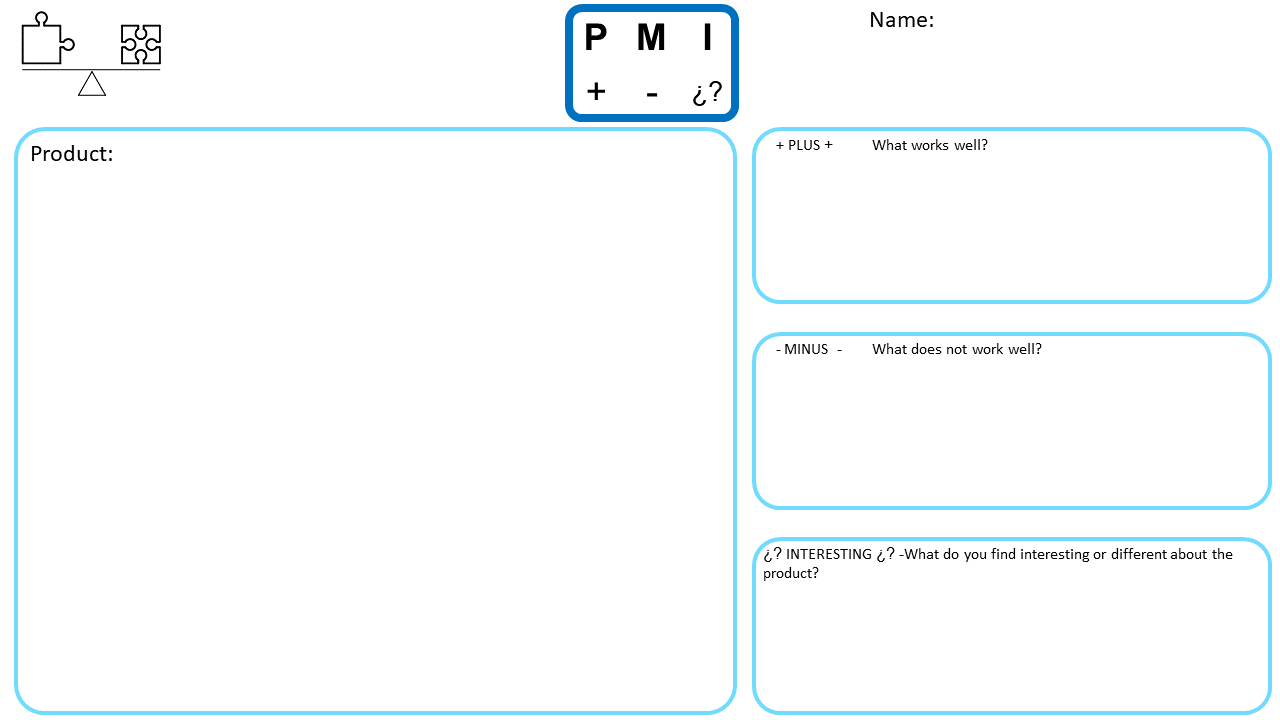
Aims to generate new ideas, promotes thinking time and asks students to withhold judgement.
Often consequences of choices go unconsidered by students. Works especially well when working within a context and speculating or predicting what might happen as a result of a choice. Use a range of timescales - tomorrow, next week, month, year, decade, etc
All design has consequences that are intentional, but design will change the system the solution is part of and will always have unintended consequences. The more these can be anticipated, the better the design.
Broaden perception, engagement and understanding of the purpose of thinking and learning.
A prioritising tool useful in planning and reviewing, as well as making choices. It is important to set a limit of 3 - 5 priorities.
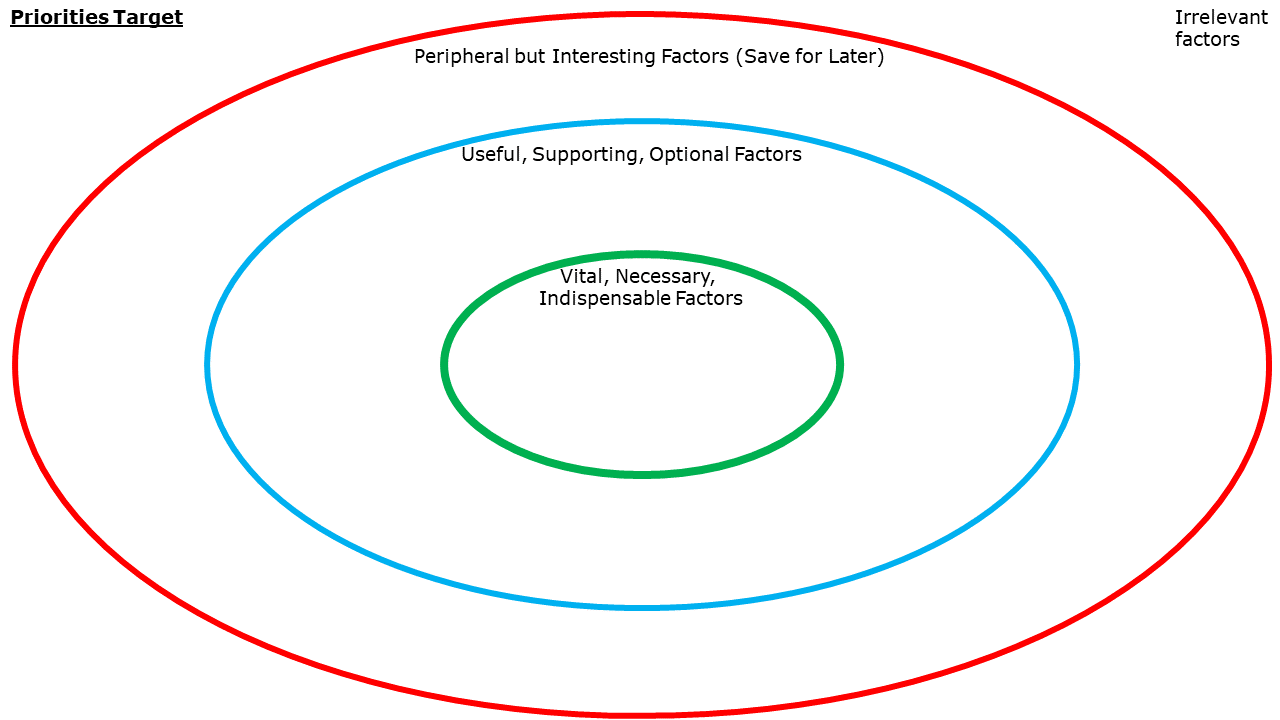
Broaded students' perception of issues. Requires students to listen to other points of view without interrupting, prejudice or judgement.
Avoid settling on the first 'right' answer- encourages students to think of alternative solutions.