
NEGATIVE SPACE

Negative space in the arts refers to the space around the objects that are the main focus of the drawing or composition. It refers to the shapes of the space left over that surrounds the focal object. Focusing on Negative Space has at least two incredibly powerful uses for designers and artists by improving both the quality of our work and our ability to see the world around us much more crearly.
1) DESIGNING WITH NEGATIVE SPACE allows us to compose elements of a design in a much more effectively and in more visually striking and dynamic ways.
2) GROW YOUR BRAIN AND IMPROVE YOUR PERCEPTION OF THE WORLD By practising drawing the negative shapes around objects it allows us to draw dispassionately and analytically and build the part of the brain that allows us to perceive things as they truly are, rather than as we might remember them or want them to be.
This in turn gives us the facility to draw and communicate design ideas much more quickly and effectively.
• 1) DESIGN SOLUTIONS USING NEGATIVE SPACE
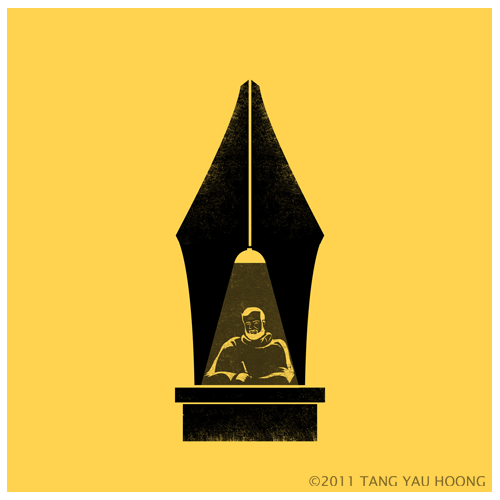
Negative Space used to enhance design
• 2) GROW YOUR BRAIN AND IMPROVE YOUR PERCEPTION OF THE WORLD
A classic and completely expected 'mistake' that novices make when learning to draw is to draw what they know rather than what they see; so in drawing a face or a house people tend to draw a composite picture of all of the faces or houses they have seen before, rather than actually making the effort to look and really see what is in front of them.
Because the negative space that surrounds the objects is not actually an object it has no meaning, emotion, or memory attached to it, so people will tend to draw much more accurately and carefully than they would normally.
This is a critical skill to practise to improve the accuracy of your drawing, and it will allow your brain to develop and retain greater skills of perception.
The activity literally grows your brain as it forces more synapses and neuronal cells to be created.